 (1).png)

Summary
Spanish Prime Minister Pedro Sánchez has issued a firm response to recent threats from US President Donald Trump regarding international trade. The US President suggested that his administration might cut off trade ties with Spain entirely. In a public statement, Sánchez used the phrase "no to war" to describe his opposition to an economic conflict. This disagreement marks a significant low point in the relationship between the two nations and could have major consequences for global markets.
Main Impact
The primary impact of this dispute is the potential for a massive disruption in the flow of goods between Europe and North America. If the United States follows through on its threat to sever trade, it would hurt thousands of businesses that rely on selling products across the Atlantic. For Spain, the US is a vital market for food, wine, and industrial parts. For the US, losing access to Spanish goods could lead to higher prices for consumers and a shortage of specific items. This tension also creates a sense of worry for investors who prefer stable relations between major world economies.
Key Details
What Happened
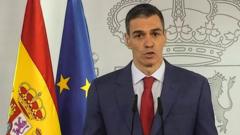
The conflict began when President Donald Trump made a public statement criticizing Spain's trade policies. He claimed that the current trade balance is unfair to the United States and threatened to end the trading relationship if changes are not made. Prime Minister Pedro Sánchez did not wait long to reply. During a scheduled event, he spoke directly about the threat, stating that Spain would not be bullied into a trade war. By saying "no to war," he was referring to the "economic war" that happens when countries stop trading or put high taxes on each other's goods.
Important Numbers and Facts
The trade relationship between Spain and the US involves billions of dollars every year. In recent years, Spain has exported over $20 billion worth of goods to the United States. Key products include olive oil, wine, medicine, and car parts. On the other side, the US sells aircraft, energy products, and technology to Spain. If trade stops, both countries stand to lose a significant amount of money. Additionally, Spain is a member of the European Union, which means any trade action against Spain is often seen as an action against the entire EU. This could lead to a much larger conflict involving many more countries.
Background and Context
To understand why this matters, it is important to know how trade works between these two countries. For a long time, Spain and the US have been allies. However, trade disputes have become more common in recent years. President Trump has often used the threat of cutting off trade or adding high taxes, known as tariffs, to get what he wants from other countries. Pedro Sánchez, who leads a socialist government in Spain, has a very different view of how the world should work. He believes in cooperation and international agreements. The phrase "no to war" is also very famous in Spain. It was used years ago to protest the war in Iraq, so using it now for a trade dispute is a very strong choice of words that resonates with the Spanish people.
Public or Industry Reaction
Business groups in both Spain and the US have expressed deep concern. Farmers in Spain, who produce a large portion of the world's olive oil, are worried that they will lose their best customers in America. In the US, companies that import Spanish goods are afraid that their costs will skyrocket. Political experts say that this move by Trump might be a tactic to force Spain to change its tax laws or its stance on certain international issues. Meanwhile, the public in Spain has shown support for Sánchez, with many people feeling that the country should stand up for itself against outside pressure.
What This Means Going Forward
In the coming weeks, we can expect to see more meetings between officials from both countries. The European Union will likely get involved to help negotiate a solution. If the situation does not improve, we might see "tit-for-tat" actions. This means if the US puts a tax on Spanish wine, Spain might put a tax on American tech products. This cycle can be very hard to stop once it starts. The goal for both sides will be to find a way to keep trading without losing face. However, if the US President decides to move forward with his threat, it could change the economic relationship between the two countries for many years to come.
Final Take
Trade is the backbone of the modern world, and when two major leaders disagree this strongly, everyone feels the effects. Pedro Sánchez is making it clear that Spain wants peace and cooperation, but he is also showing that he will not back down from a threat. The next few months will show whether these words lead to a real economic fight or if diplomacy can save the day. For now, businesses and workers on both sides of the ocean are waiting and watching with concern.
Frequently Asked Questions
Why did the US President threaten Spain?
The US President believes that the current trade rules are not fair to American businesses and wants to change the terms of how the two countries do business.
What does "no to war" mean in this context?
It means that Spain does not want to enter into a trade war, which is a situation where countries try to hurt each other's economies by blocking trade or adding high taxes.
How will this affect regular people?
If trade is cut off, the prices of goods imported from Spain, like certain foods and drinks, could go up in the US. In Spain, workers in industries that sell to the US could face job losses.